
If you’ve tried “doing SEO” or internet marketing for your local business before and felt like nothing moved, I get it.
A lot of what gets recommended is either too generic, too technical, or just outdated.
Online marketing for local small businesses has a specific logic to it — it’s not the same as SEO for a national brand, and it’s not just “post on Instagram and hope.”
There are a handful of things that actually move the needle, and a lot of things that look like marketing but produce nothing.
We work with local service businesses across the US, and the pattern is consistent.
Clients like Chai Craft — a bootstrapped food business that came to us with zero online presence — are now driving real inbound customers through organic search alone.
The ones that win aren’t doing anything exotic. They’re just executing the fundamentals better than their local competition. That’s what I’ll walk you through here.
Most Local Small Business Internet Marketing Advice is Outdated
I see a lot of guides telling local businesses to “just post on social media” or “set up a Google Business Profile and you’re done.”
That advice isn’t wrong exactly, but it’s dangerously incomplete.
Here’s what’s actually changed in 2025-2026:
- AI Overviews are changing how people research local services — even if they’re not replacing local search results yet.
When someone searches “how much does a plumber charge” or “what to look for in an HVAC company,” Google’s AI now answers that question directly on the results page.
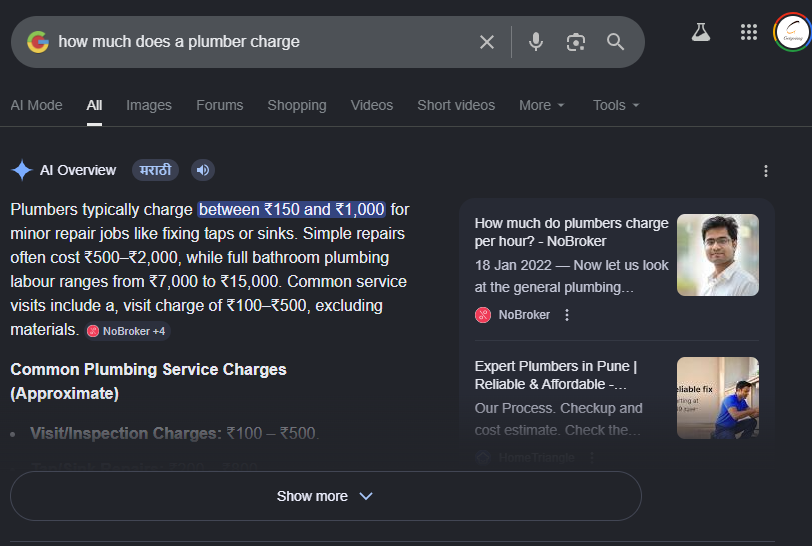
Your business still needs to show up in the traditional local pack — but the content on your website now also needs to be good enough to inform AI-generated answers.
If you’re not optimized for this, you’re invisible.
I wrote a deeper breakdown of how generative engine optimization is changing local search if you want to go further on this.
- Google’s local algorithm rewards businesses that look trustworthy across multiple signals — not just the ones with the most backlinks.
- Review velocity matters as much as review count.
Fresh reviews signal active businesses. Stale profiles don’t get featured.
So what does a real local online marketing strategy look like for a small business in 2026? Let me break it down.
Step 1: Get Your Local Business & Google Business Profile Actually Right
1. GMB
This is table stakes, but most businesses still mess it up.
Your Google Business Profile (GBP) is often the first thing a potential customer sees. It needs to look like a business that’s alive and well-run.
Here’s what matters most:
Complete every field. Business category, service areas, hours, phone, website — all of it. Incomplete profiles rank lower, full stop.
Upload photos regularly. Not stock photos. Real ones. Your storefront, your team, your work in progress. Google rewards freshness, and so do customers.
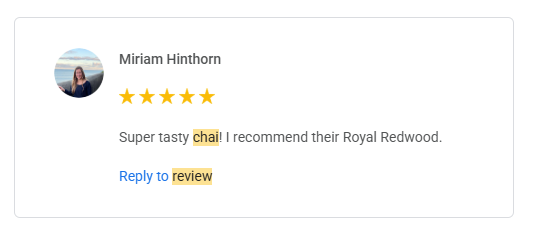
Respond to every review. Yes, every one. When Chai Craft was building their online presence, one of the first things we focused on was creating a review response process. It signals to Google (and to customers) that there’s a human behind the business.
Use the Posts feature. Most businesses ignore this. Weekly posts about offers, updates, or services keep your profile active and give Google more context about what you do.
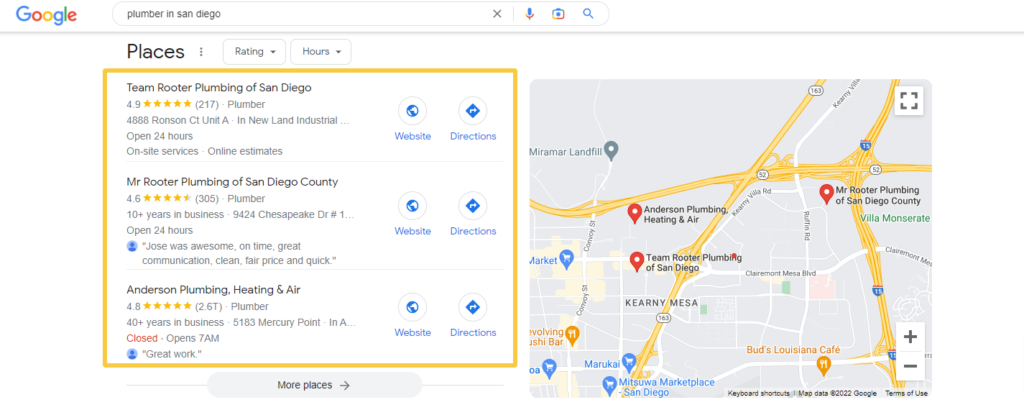
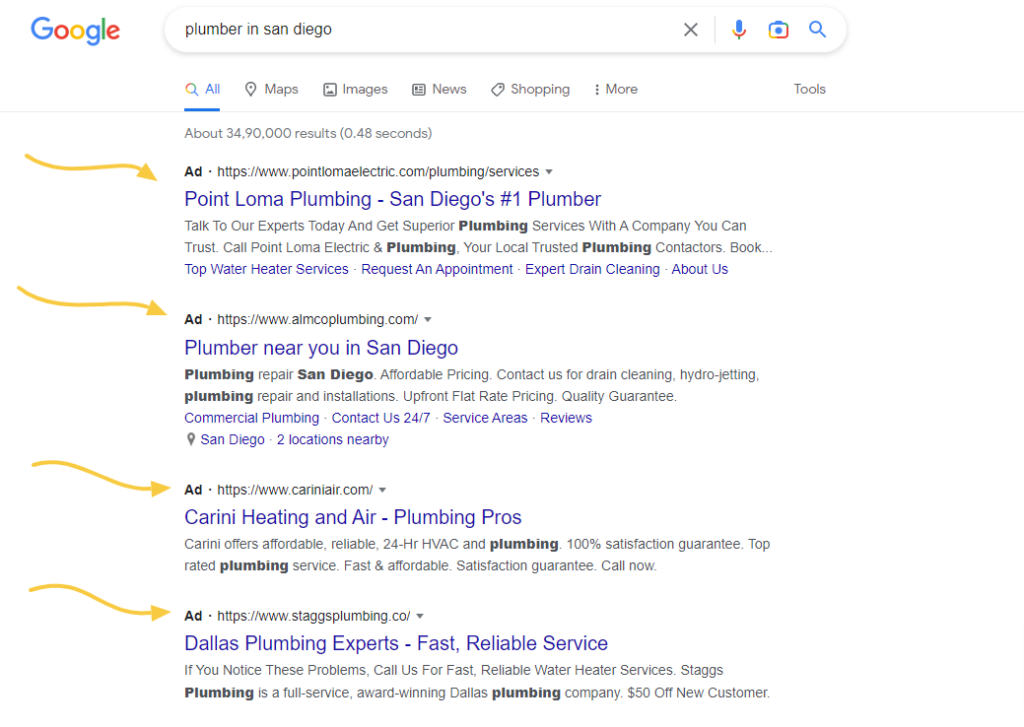
Just see how local business are ranking on Google’s local business pack on first page of Google for search term “Plumber in San Diego”.
2. Bing Places for Business:
Another free directory, Bing Places for Business is a great way to reach potential customers who are using Microsoft’s search engine.
You can even import your Google My business settings to Bing places easily.
3. Yahoo! Local:
Yahoo! Local is a comprehensive directory that covers millions of businesses in the United States. While it does require a paid listing, the exposure you’ll get will be well worth the investment.
4. Yelp:
Yelp is one of the most popular online review sites, and it’s also a great directory for local businesses. Getting listed on Yelp is free, and it can bring a lot of attention to your business.
5. Superpages:
Superpages is one of the largest online directories, with listings for millions of businesses worldwide.
A listing on Superpages starts at just $9 per month, making it an affordable way to reach new customers online.
Step 2: Get Your Website Technical Basics Sorted
You don’t need a fancy website. You need one that loads fast, works on mobile, and is structured in a way Google can actually understand.
When Chai Craft came to us, their technical SEO fundamentals were the first thing we fixed — before any content work, before any link building.
Technical issues are the ceiling that limits everything else. I’d recommend running through a proper website audit checklist before anything else so you know exactly what you’re dealing with.
A quick checklist:
- Page speed under 3 seconds on mobile
- HTTPS (no exceptions)
- Crawlable pages — no accidentally blocked sections
- Clear heading structure (H1, H2, H3 used properly)
- Schema markup for local business (this is how you talk directly to AI search engines)
Schema markup in particular has become more important as AI Overviews pull structured data to answer local queries.
If you’re a plumber and you have proper LocalBusiness schema with your service area, hours, and reviews marked up — you’re giving LLMs a clean data feed to surface you.
Step 3: Build Content That Matches What People Are Actually Searching For
This is where most local businesses either do nothing or do the wrong thing.
“Doing nothing” means having a website that just says “We’re a great plumbing company, call us.” That kind of page ranks for nothing.
“Doing the wrong thing” means publishing generic blog posts that AI could have written and that no one in your city is actually searching for.
What works is creating content that answers the specific questions your local customers are typing into Google — and now, asking ChatGPT and Perplexity.
The place to start is understanding how to create an SEO strategy built around search intent, not just keywords.
For a local food business like Chai Craft, this meant:
- Service pages optimized for city-specific keywords
- FAQ content based on real questions people ask about their product category
- A blog that covered topics their customers actually cared about — sourcing, preparation, local events
The key is intent matching. Someone searching “chai delivery near me” has very different intent than someone searching “what is masala chai.”
Your content needs to serve both — one for ready-to-buy customers, one for building brand awareness.
One thing that’s also become a bigger ranking factor recently is information gain — whether your content actually adds something new versus just rephrasing what’s already out there.
Google is getting better at detecting this, especially with information gain as a ranking signal.
Original experience, real examples, and genuine opinions matter more now than ever.
Step 4: Build Local Authority (Links and Mentions That Actually Count)
Backlinks matter for local SEO, but the type of backlinks matters even more than the quantity.
For local businesses, the highest-value links come from:
- Local news and blog coverage — a mention in your city’s business journal or neighborhood blog is worth more than a random directory listing
- Industry associations — if you’re an HVAC company, a mention on a contractor association site signals relevance
- Local chambers of commerce and business directories — these are legitimacy signals
- Genuine review platforms — Yelp, BBB, industry-specific directories
Our guide to PR and media outreach for SEO goes deep on how to actually get these placements without a big PR budget — worth reading if link building feels overwhelming.
When we ran Chai Craft’s link building campaign in months 4-5, we focused on quality over quantity.
The result was a 90% improvement in their backlink profile — not from blasting hundreds of spammy links, but from getting the right mentions in the right places.
One thing that’s become increasingly important: unlinked brand mentions.
When local news mentions your business name without linking to you, AI systems like Perplexity and ChatGPT still pick that up as a trust signal.
Getting covered — even without a link — matters.
Step 5: Build and Manage Your Review Ecosystem
Reviews are no longer just social proof.
They’re a ranking signal, an AI training signal, and often the first thing a potential customer reads.
Here’s what most businesses get wrong: they wait for reviews to happen organically, then panic when a bad one comes in.
What you should be doing:
Create a review request process. After every job, every order, every service — have a system that asks happy customers to leave a review. Text works better than email. Make it one tap, not five clicks.
Respond fast to negative reviews. One bad review handled well can actually build trust. One bad review ignored looks terrible.
Spread reviews across platforms. Google is the priority, but Yelp, Facebook, and industry platforms matter too. Chai Craft went from zero reviews to a meaningful review base across multiple platforms within their first six months.
Don’t fake it. Purchased reviews have short shelf lives. Google’s getting better at spotting them, and the risk isn’t worth it.
Step 6: : Build E-E-A-T Signals Into Everything You Do
This one doesn’t get talked about enough in local business marketing, but it’s becoming the deciding factor in both traditional search and AI-generated results.
E-E-A-T stands for Experience, Expertise, Authoritativeness, and Trust. Google uses it to evaluate whether your business deserves to be recommended — and LLMs have absorbed the same logic.
I’ve written a full breakdown of why E-E-A-T matters even more in the AI era if you want to go deeper.
For local businesses, building E-E-A-T looks like:
- A real “About” page that tells your story and credentials
- Consistent NAP (name, address, phone) across every platform
- Owner or team bios that establish who’s behind the business
- Community involvement — sponsorships, local events, press mentions
- Consistent publishing of content that demonstrates genuine expertise in your field
The businesses that show up in AI-generated local answers aren’t just the ones with the best keyword optimization. They’re the ones that have given Google and LLMs enough signals to trust them. That’s the real game now.
Step 7: Track What’s Actually Working
Most local businesses have no idea where their customers are coming from. That’s a problem because you can’t improve what you don’t measure.
The basics you should have set up:
- Google Search Console — shows you which searches your site appears for, and how often people click through
- Google Analytics 4 — tracks where your website visitors come from
- GBP Insights — shows calls, direction requests, and website visits from your Google Business Profile
Once Chai Craft had these running, we could see exactly which keywords were driving inquiries and double down on what was working. In the final month of their engagement, that data-informed optimization is what took them from good results to exceptional ones.
Step 8: Paid Online Advertising for Local Small Businesses — When It Makes Sense
Organic search is the long game.
But there are situations where paid internet marketing for local businesses makes sense alongside your organic strategy — especially in the early months before SEO gains traction.
Here’s a clear-eyed breakdown of the options and when to use them.
Google Local Service Ads (LSAs)
If you’re in a service trade — plumbing, HVAC, cleaning, electrical — Local Service Ads are the single best paid channel available to you.
They sit above everything else in Google search results, including regular Google Ads, and they charge per lead rather than per click.
The other big advantage: LSAs come with a Google Guaranteed badge, which is a meaningful trust signal for customers who don’t know you yet.
For a small local business with no online reputation yet, that badge does a lot of heavy lifting.
Google Search Ads (Pay-Per-Click)
Standard Google Ads work well for local businesses targeting high-intent keywords like “emergency plumber near me” or “HVAC repair [city].”
The cost-per-click can get expensive in competitive markets, so it’s worth being selective — focus on keywords with clear buying intent rather than broad awareness terms.
The key mistake local businesses make with Google Ads is running them without a well-optimized landing page. Sending paid traffic to a generic homepage is burning money.
Meta Ads (Facebook and Instagram)
Meta Ads work differently from Google — they’re interruption-based, not intent-based. People aren’t searching for you; you’re showing up in their feed.
This makes Meta better for awareness and retargeting than for direct lead generation in most local service categories.
Where Meta Ads shine for local businesses: promoting a specific offer (first-time discount, seasonal deal), retargeting website visitors who didn’t convert, and building brand familiarity in a specific geographic radius before a purchase decision happens.
The Rule of Thumb
Paid advertising for local small businesses works best as a bridge, not a foundation.
Use it to generate early leads while your organic strategy matures. But always be building the organic side — reviews, GBP, content, backlinks — because that’s the asset that pays you back indefinitely without a monthly ad spend.
If you’re wondering how to split your budget between paid and organic, our breakdown of SEO budget allocation factors is a good starting point.
The Thing Nobody Wants to Hear
There’s no hack that gets a local small business ranking overnight.
The strategies above work — they worked for Chai Craft, they’ve worked for HVAC companies, plumbers, cleaning businesses, and real estate agents we’ve helped — but they take time and consistency.
What separates the local businesses that win online from the ones that don’t isn’t budget.
It’s execution.
Most competitors in your local market are not doing this stuff well.
That’s the opportunity.
FAQs related to Online Marketing for Local Business
How can I promote my local business for free
There are a number of ways to promote your local business for free. One way is to create a website for your business and include information about your products or services, your hours of operation, and contact information. You can also distribute flyers and brochures in your community and post them in local businesses. You can also offer coupons or special promotions on your website or through social media platforms.
What Digital Marketing Strategy Is Best for My Small Business?
The first step is to determine the goals of your small business. Are you looking to increase brand awareness, website traffic, or leads and sales?
Once you have a better understanding of your goals, you can begin to tailor your digital marketing strategy to fit your needs.
If you’re looking to increase brand awareness, social media and content marketing are great options. If you’re looking to drive website traffic, SEO and paid advertising are great strategies.
And if you’re looking to generate leads and sales, email marketing and PPC are good options.
How can I grow my SMB using online marketing?
There are a few key ways that you can grow your SMB using online marketing. One is to create a strong website that is optimized for search engines and functions as an effective online brochure for your business. You can also create compelling content marketing pieces, such as blog posts, infographics, and videos, that will attract attention and drive traffic to your site. Additionally, you can use social media platforms to engage with potential customers and promote your business. By using all of these strategies together, you can reach a larger audience and grow your SMB using online marketing.
How long does it take for online marketing to work for a local business?
Realistically, 3–6 months before you see meaningful organic traction. Technical fixes and Google Business Profile improvements can show results faster — sometimes within weeks. Content and link building take longer but compound over time. The businesses that get frustrated and quit at month 2 are usually the ones that would have seen results at month 4.
Do I need a big budget to market my local small business online?
Not as much as most agencies want you to think. The highest-leverage activities — GBP optimization, on-page SEO, review management — cost more time than money. Paid internet marketing like Google Local Service Ads or Meta Ads can supplement your organic strategy, but they’re not a prerequisite. Start with the organic foundation first and layer in paid only when you have a clear conversion path for the traffic.
Is SEO still worth it for local businesses or has AI killed it?
AI search has actually made local SEO more valuable, not less. LLMs like ChatGPT and Perplexity pull from the same trusted sources that rank well on Google. If your business has strong organic visibility and good E-E-A-T signals, you’re more likely to show up in AI-generated answers too — not less.
What’s the single most important thing a local business can do online right now?
Get your Google Business Profile completely filled out and actively maintained. It’s the highest-impact, lowest-cost move available to any local business. Most profiles in most local markets are still poorly optimized — that gap is your opportunity.
How important are online reviews for local SEO?
Extremely. Reviews are a ranking signal, a trust signal, and increasingly an AI citation signal. Google looks at review volume, recency, and how you respond. A business with 50 fresh reviews and thoughtful responses will outrank a competitor with 200 old, ignored ones in many cases.
Does social media help with local SEO?
Indirectly, yes. Social media doesn’t directly move your Google rankings, but it drives brand searches, builds local awareness, and can generate backlinks and mentions — all of which do affect SEO. Don’t ignore it, but don’t expect it to replace search optimization.
What kind of content should a local business publish on its website?
Start with your core service and location pages — these are the pages that rank for “plumber in [city]” style searches. Then build out FAQ content and blog posts that answer the specific questions your customers are actually asking. Hyperlocal content — neighborhood guides, local event coverage, city-specific advice — performs well because national competitors rarely bother with it.
How do I know if my online marketing is actually working?
Set up Google Search Console and Google Analytics 4 before anything else. Search Console shows you what searches your site is appearing for. Analytics shows you where your traffic is coming from. GBP Insights shows you calls, direction requests, and website visits from your listing. If you can’t measure it, you can’t improve it.
Should I run Google Ads while I’m building organic visibility?
It depends on your timeline and cash flow. Ads can drive leads while your organic strategy matures — but they stop the moment you stop paying. Organic visibility compounds. If you have the budget, running a modest ads campaign alongside an SEO strategy isn’t a bad idea short term. Just don’t let paid become a crutch that stops you from building the long-term asset.
What’s the difference between internet marketing and SEO for a local business?
Internet marketing is the broader umbrella — it includes SEO, paid ads, social media, email marketing, and any other digital channel you use to reach customers. SEO is specifically about showing up in organic search results without paying for placement. For most local small businesses, SEO and Google Business Profile optimization give the best return per dollar spent, but a complete internet marketing strategy uses multiple channels working together.
What online advertising techniques work best for local entrepreneurs?
The most effective online advertising techniques for local entrepreneurs are Google Local Service Ads (high-intent, pay-per-lead), geo-targeted Google Search Ads for service keywords, and Meta retargeting campaigns for people who’ve already visited your website. The common thread: target people who are already looking for what you offer or who’ve already shown interest. Broad awareness advertising is expensive and hard to measure for most small local businesses.
What makes local SEO different from regular SEO?
The intent and competition are both more specific. Someone searching “coffee shop” wants something global. Someone searching “coffee shop in Naperville” knows exactly what they want and is close to a buying decision. Local SEO focuses on capturing that high-intent, geographically specific traffic — through GBP optimization, local citations, location-specific pages, and reviews. The audience is smaller but converts at a much higher rate.