

AI overviews are summaries displayed on search engine results pages that combine information from multiple sources to answer user queries directly. Unlike traditional snippets, which pull from one webpage, AI overviews synthesize data from various sites, offering a broader and more detailed response. These summaries aim to provide users with quick, accurate answers without needing to click through.
For businesses and SEO professionals, this means creating well-structured, clear, and authoritative content that AI systems can easily process. While AI overviews can boost visibility by featuring content in prominent positions, they also pose challenges, such as reduced click-through rates when users get all the information they need directly in the overview.
Key differences between AI overviews and traditional snippets include:
- Multiple sources cited instead of just one.
- Combined and reworked content for a fuller response.
- Greater emphasis on structured data and semantic relevance.
SEO strategies now focus on making content AI-friendly through improved structured data, mobile optimization, and semantic SEO. While AI overviews offer new opportunities for exposure, they also require adapting to changes in how search engines prioritize and present information.
How AI Overviews Impact Technical SEO
New Focus: Visibility in AI Summaries
The rise of AI-generated summaries is changing how websites approach technical SEO. Instead of solely aiming for top rankings, the focus now shifts toward creating content that AI systems can easily cite. This requires a fresh perspective and strategy.
With AI overviews, the priority becomes making your content easy for AI to digest and reference. Even if your site doesn’t rank first, being featured in an AI summary can still drive significant visibility and traffic.
This shift means technical SEO experts need to rethink content structure and presentation. The goal is to make it simple for AI to extract, interpret, and cite key details. Instead of optimizing primarily for human readers clicking through search results, the focus broadens to include AI systems that synthesize information from multiple sources. This shift demands specific technical adjustments to ensure your content is AI-friendly.
Technical SEO Requirements for AI Overviews
Adapting to this new landscape requires precise technical optimizations. One of the most critical steps is improving structured data. Using schema markup for articles, FAQs, how-to guides, and product pages helps AI systems understand your content’s context and purpose.
Website performance is another key factor. AI systems are more likely to rely on fast-loading pages with smooth user experiences when pulling data for overviews. Meeting Core Web Vitals benchmarks, such as a Largest Contentful Paint (LCP) under 2.5 seconds and a Cumulative Layout Shift (CLS) below 0.1, is essential to ensure your site is crawled efficiently and seen as a reliable source.
Semantic SEO also becomes more important. This involves using related keywords, synonyms, and topic clusters to help AI grasp the breadth of your content. Well-structured, comprehensive content with clear headings and logical organization is more likely to be selected by AI systems.
Additionally, mobile optimization is non-negotiable. AI prioritizes content that performs well across all devices. Clean HTML, optimized meta tags, and fast server responses improve accessibility for AI crawlers, ensuring your content is ready for inclusion in summaries.
Benefits and Challenges of AI in SEO
AI integration brings both opportunities and hurdles for SEO strategies. One major advantage is the chance for increased visibility without needing top organic rankings. Smaller sites with high-quality, well-structured content can now compete with larger players by being featured in AI-generated summaries. This levels the playing field, allowing authoritative content to stand out regardless of domain authority.
However, reduced click-through rates present a challenge. When AI overviews provide complete answers, users may skip visiting the source website. To counter this, it’s essential to balance thorough citations with elements that encourage clicks, such as enticing calls to action or additional value on your site.
Another benefit is brand exposure. Even if users don’t click through, having your content cited in AI summaries builds recognition and authority. Over time, this can lead to increased direct searches and brand-specific queries.
On the flip side, accuracy issues can arise. AI systems may misinterpret or misrepresent your content, potentially harming your brand or spreading incorrect information. To avoid this, structure your content clearly and monitor how it’s presented in AI summaries.
Lastly, traditional SEO metrics become less reliable in this new environment. AI-driven visibility doesn’t always align with rankings, so websites need to develop new ways to measure success – like tracking citations and mentions in AI-generated summaries rather than focusing solely on ranking positions.
AI Overviews in Google Search: Find Out Which SEO Keywords Trigger AI-Generated Overviews
Using AI Overviews for SEO Analysis
AI overviews are reshaping the way SEO analysis is done, moving beyond basic technical fixes to deliver actionable insights. By processing complex datasets, these tools help teams focus on proactive strategies rather than just reactive problem-solving.
Website Performance Analysis
AI tools analyze Core Web Vitals alongside user behavior to identify performance bottlenecks. For instance, while your homepage may load quickly, AI might flag other pages with slower load times that correlate with higher bounce rates. This gives you a clear roadmap for addressing user experience issues.
When it comes to crawlability, AI pinpoints low-value pages that consume crawl budgets unnecessarily. This helps SEO teams focus on optimizing pages that contribute to business goals. These insights go beyond traditional audits by highlighting fixes with the greatest impact.
AI also excels at identifying mobile performance issues, such as poorly implemented responsive designs or slow-loading elements. Suggestions might include optimizing image formats or streamlining stylesheet delivery to improve mobile usability. Beyond immediate fixes, AI insights often reveal hidden opportunities to enhance your site’s overall SEO performance.
Finding SEO Opportunities
AI-powered tools uncover opportunities that traditional audits might overlook by analyzing competitor strategies, search trends, and content gaps simultaneously. This multi-layered approach can lead to traffic growth by identifying areas ripe for improvement.
For example, AI can refine content gap analysis by considering semantic relationships, not just missing keywords. It may suggest new content topics that align with your audience’s interests. While your site might excel in certain niches, AI could reveal related topics that remain underdeveloped.
On the technical side, AI dives deeper than standard audits. It can assess site architecture and recommend changes, such as improving internal linking, simplifying URL structures, or updating schema markup. These adjustments enhance both user experience and search visibility.
AI can also track seasonal trends by analyzing recurring search patterns, helping you adjust your content strategy ahead of time. Additionally, geographic search data can reveal local opportunities for creating tailored content that resonates with regional audiences.
Improving Content Strategies
These insights feed directly into smarter content strategies. AI overviews help refine content planning by analyzing user engagement, search intent, and performance metrics, ensuring your efforts are both targeted and effective.
Building topical authority becomes more systematic with AI guidance. Instead of randomly creating content, AI can help identify clusters of related topics. Developing these clusters into a cohesive resource hub strengthens your site’s expertise and relevance in key areas.
Content optimization recommendations go beyond basic keyword suggestions. By analyzing high-performing content, AI can suggest ideal structures, lengths, and engaging elements to replicate success. For example, it might recommend adding multimedia or interactive features to boost audience engagement.
AI also improves how content aligns with user intent. By examining search query variations and user behavior, it identifies gaps where your content may fall short, enabling precise updates that improve rankings and user satisfaction.
When it’s time to refresh content, AI identifies pages losing traction due to outdated information or shifting trends. Instead of guessing, you can prioritize updates for pages with the most potential to deliver measurable results.
Finally, AI insights extend to content distribution. By analyzing which formats and topics perform best across different channels, AI helps you refine your promotional strategies, ensuring your content reaches the right audience in the most effective way.
Tools with AI Overview Features
Choosing the right AI tools is crucial for building a strong technical SEO strategy in today’s AI-driven search landscape. Many tools now use AI to generate summaries and deliver personalized SEO insights by combining traditional SEO metrics with machine learning. This fusion provides insights that were previously out of reach.
Google Search AI Overviews
Google’s Search Generative Experience has transformed how search results are presented. AI Overviews, which now appear at the top of search results, compile information from multiple sources to answer user queries in a more comprehensive way. Unlike traditional featured snippets that pull content from a single source, these overviews draw from several websites, offering direct and synthesized answers.
For SEO professionals, understanding what drives AI Overview selection is essential. Google prioritizes content that demonstrates expertise, authority, and is structured in a way that AI can easily interpret. This means using clear headings and organizing topics logically. While informational queries may see lower click-through rates when answers are provided directly in the overview, commercial and navigational queries still generate website traffic.
Next, let’s explore how Visibility Ventures incorporates these strategies into its SEO practices.
Visibility Ventures‘ Approach
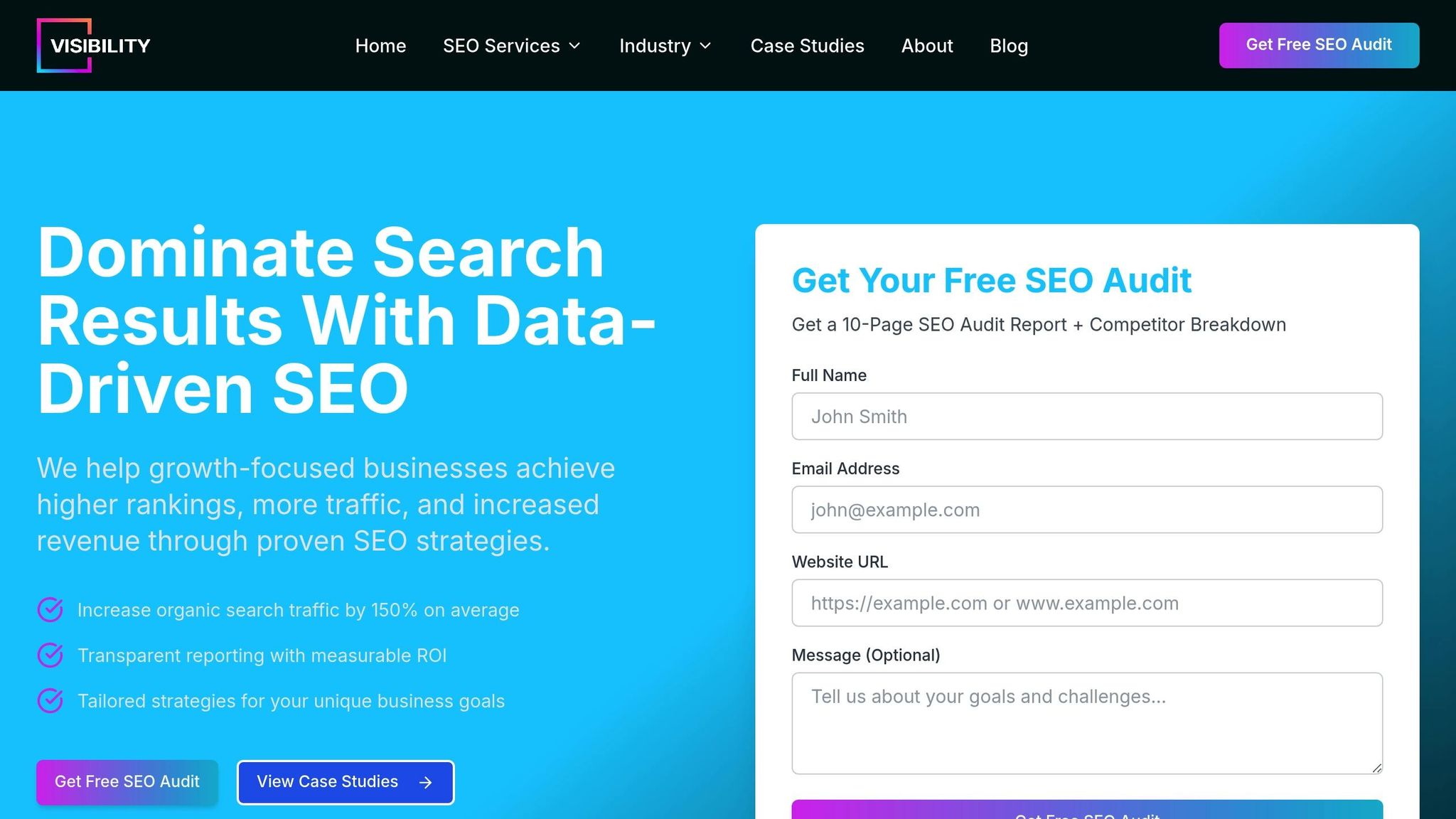
As AI continues to reshape search, adapting strategies becomes essential. Visibility Ventures uses data-driven methods to align with the requirements for AI Overview optimization. Their approach focuses on creating content and technical frameworks that are valuable to both human users and AI systems.
The agency conducts in-depth SEO audits to identify factors influencing AI Overview selection. They evaluate elements like content depth, topical authority, and technical setup. Instead of sticking to basic keyword optimization, they focus on how well content answers user questions and demonstrates authority. By developing content clusters that establish expertise in specific areas, Visibility Ventures ensures websites are positioned for inclusion in AI-generated summaries. They also provide transparent reporting to track visibility across both traditional search results and AI features.
Founder Ayush Gupta emphasizes the importance of adapting to AI-driven search trends while maintaining a strong focus on user value.
Visibility Ventures fine-tunes content for semantic search patterns, improves structure for better AI interpretation, and applies technical SEO practices that support both traditional search engines and AI tools.
AI Tools Comparison Table
| Feature | Google Search AI Overviews | Visibility Ventures Services |
|---|---|---|
| Primary Function | Creates AI-generated summaries from search results | Develops SEO strategies and optimizes content |
| Content Analysis | Assesses content for inclusion in overviews | Evaluates content for AI Overview optimization potential |
| Reporting Clarity | Displays source citations in search results | Provides detailed performance reports |
| Optimization Focus | Automatically selects content using advanced algorithms | Customizes content for inclusion in AI overviews |
| Cost Structure | Free as part of Google’s search service | Pricing tailored to business needs |
| Technical Requirements | Needs authoritative, well-structured content | Offers technical SEO audits and implementation support |
This table highlights how these tools complement each other in the evolving world of AI-driven SEO. Google’s AI Overviews offer a new way to present and aggregate search results, while expert services like those from Visibility Ventures provide the strategic groundwork to optimize content for these features. Success in this space depends on combining technical know-how with thoughtful content planning.
Conclusion: Adjusting to AI-Driven SEO
The rise of AI-powered search is reshaping the way businesses approach content strategy. Adapting to AI Overviews isn’t just about keeping up with the latest trends – it’s about staying visible and competitive in an ever-evolving digital space. By focusing on structured content and semantic optimization, companies can better position themselves for success in this new SEO landscape. Here’s a breakdown of the key shifts and what they mean for the future.
Key Takeaways
AI Overviews have redefined SEO by altering how search results are displayed and consumed. This means businesses can no longer focus solely on ranking for individual keywords. Instead, they need to establish topical authority and build credibility across entire subject areas to remain relevant.
Optimizing for AI Overviews requires going beyond traditional SEO practices. Content must be structured with clear headings, flow logically, and address user questions thoroughly. Semantic search patterns now outweigh exact keyword matches, emphasizing the importance of understanding user intent and delivering contextually rich content.
AI tools for website performance analysis offer insights that were previously out of reach. These tools can uncover trends in user behavior, pinpoint content gaps, and highlight areas for optimization. However, the real value lies in combining AI-driven insights with human expertise to create content that meets the needs of both users and search algorithms.
For businesses, the shift to AI Overviews is more opportunity than obstacle. While informational queries may lead to fewer clicks due to direct answers in search results, commercial and navigational queries still generate meaningful traffic. The challenge is identifying which types of content are best suited for AI Overview inclusion and optimizing them with clear structure and semantic relevance.
Looking ahead, these changes are only the beginning of what AI will bring to the SEO world.
Future of AI in SEO
AI’s role in search is advancing quickly, and businesses that adapt early will gain a competitive edge. Search engines are becoming better at understanding context, user intent, and the overall quality of content. The future belongs to websites that consistently deliver real value to their audiences.
AI tools are also becoming more precise. They’re evolving to predict emerging topics before they gain traction and to recommend optimization strategies based on real-time search behavior. Companies that embrace these tools while prioritizing user experience will position themselves for long-term growth.
AI is set to become a standard part of SEO. Businesses that master AI-assisted content creation, technical optimization, and performance analysis will outperform those stuck in outdated methods. This doesn’t mean abandoning traditional SEO – it means enhancing those practices with AI to achieve faster and more effective results.
Thriving in this AI-driven landscape requires a thoughtful balance of technology and creativity. The most successful businesses will use AI to amplify their expertise, crafting content and experiences that not only meet the technical demands of modern search engines but also resonate deeply with users.
FAQs
How can businesses optimize their content to appear in AI Overviews?
To improve the likelihood of your content appearing in AI Overviews, focus on crafting clear, well-organized content that directly addresses specific user questions. Use straightforward language, include structured data, and ensure your content reflects expertise, authority, and trustworthiness (E-E-A-T).
Make sure your content aligns with search intent by being relevant, distinctive, and genuinely helpful. Including proper citations and following SEO best practices can also boost its visibility in AI-generated summaries. By prioritizing these aspects, you enhance your content’s appeal to AI systems, increasing its chances of being featured.
What challenges do businesses face when adapting SEO strategies for AI-generated summaries?
Adapting SEO strategies to accommodate AI-generated summaries comes with its own set of hurdles. One of the biggest concerns is the potential for a significant drop in organic traffic – studies suggest this decline could range anywhere from 18% to 64%. This happens because AI summaries often take the place of traditional search results, reducing user interaction and visibility for many websites.
Another pressing issue is the risk of misrepresentation. AI summaries might not always accurately reflect your brand or content, which can make it harder to maintain your originality and credibility – two critical factors for SEO success.
To tackle these challenges, businesses should prioritize using structured data to help AI systems better interpret and showcase their content. Additionally, strengthening brand authority is essential to stay competitive in this evolving, AI-driven search landscape.
What impact do AI Overviews have on traditional SEO metrics, and how can businesses measure success effectively?
AI is changing the way businesses evaluate SEO metrics. The old standbys – keyword rankings, click-through rates (CTR), and organic traffic – are becoming less dependable as AI-driven search continues to evolve. Instead, businesses should start paying attention to new success metrics like revenue per visit, deeper user engagement (beyond just clicks), brand mentions, and how often they appear in AI-generated snippets.
Adapting to this shift means focusing on metrics that tie directly to business goals, such as conversions or customer retention, rather than sticking to outdated measurements. This approach provides a clearer picture of performance in an AI-driven search environment.